Perpay is great for a lot of people. You can pay over time without a traditional credit card, and Marketplace orders come with no interest or fees. Payments are usually deducted from each paycheck. Perpay+ costs $5 per month and reports an eligible spending limit to all three major credit bureaus.
The tradeoff? Flexibility. You’re limited to Perpay’s Marketplace, and most payment and credit-building features rely on payroll direct deposit.
So, what can you use instead? Some alternatives offer a similar marketplace, while others work at more stores, provide Pay in 4 plans, finance larger purchases, or offer another way to build credit.
Let’s find the right one for you.
Key Takeaways
- Zebit: The closest alternative to Perpay’s shopping marketplace
- Sezzle: A stronger option for Pay in 4 with credit reporting
- Klarna: More choices for when and how you pay
- Afterpay: A simple four-payment schedule
- Zip: Better access beyond a limited merchant directory
- Affirm: Longer terms for bigger purchases
- Katapult: Lease-to-own access for shoppers with limited credit options
Closest to the Perpay Experience
Sezzle
Sezzle makes more sense when you want credit-building potential without being limited to one shopping marketplace. Its standard Pay in 4 plan divides an eligible purchase into four installments, usually with the first payment due at checkout and the remaining payments collected over six weeks.
The Sezzle Up program can report your payment history to credit bureaus after you meet its enrollment requirements, including paying off an order on time and linking a bank account as your default payment method. Payments that remain overdue for 30 days or longer may also be reported, so the credit feature can help or hurt depending on how you manage the account.
Sezzle doesn’t require you to send part of each paycheck to the company, and qualifying orders may allow payment rescheduling. However, service fees, late charges, failed-payment fees, or rescheduling fees may apply depending on the order, state, and payment method.
Choose Sezzle when access to more stores matters as much as credit reporting. Perpay remains simpler if you want longer repayment tied automatically to payday and don’t want to sort through several possible fee types.

Zebit
Zebit will feel familiar if you mainly use Perpay to shop for electronics, furniture, appliances, fitness equipment, and other products inside one marketplace. Approved shoppers receive a spending limit that can range from $200 to $5,000, then repay eligible orders over as long as six months at 0% APR. Applying doesn’t require a traditional FICO check.
The biggest difference is how you pay. Zebit generally requires a down payment of 25% to 35% at checkout, with the remaining balance divided into installments. Payments come from your chosen payment method rather than directly from your employer, so you don’t need to adjust your payroll instructions.
Zebit is the closest replacement for shoppers who like Perpay’s marketplace but dislike paycheck deductions. Just compare the product price with other stores before ordering. A 0% financing plan doesn’t necessarily mean the item itself is being sold at the lowest available price.
Better When You Want More Stores
Klarna
Klarna gives you more ways to pay than Perpay’s standard Marketplace setup. Depending on the purchase and approval decision, you may be offered Pay in 4, Pay in 30 days, or longer monthly financing.
Pay in 4 divides the purchase into four payments collected every two weeks. Pay in 30 delays the full payment until 30 days after the merchant ships the order, which can be useful when you want to receive and inspect something before paying. Klarna also offers longer plans that may stretch from six to 24 months.
Retail-heavy alternatives are covered in our Klarna review, including pay-later options at major stores.
Those options make Klarna more flexible, but they also make the cost less consistent. Pay in 4, Pay in 30, and paying in full can be interest-free when paid on time, while monthly financing may include interest. Some Pay in 4 offers can also include a service fee, and late fees may apply.
Klarna is a better fit when you want the payment schedule to change with the purchase instead of using the same paycheck-based setup every time.
Afterpay
Afterpay is easier to understand than most Perpay alternatives. Its standard plan breaks a purchase into four installments over six weeks, with the first payment made upfront. The remaining payments are generally collected every two weeks.
You can shop with participating online and in-store merchants without changing your direct deposit or waiting for Perpay to receive a payroll payment before an order moves forward. The shorter schedule also means you’ll finish paying sooner.
That speed is also the downside. One-quarter of a large purchase can be a heavy withdrawal every two weeks, especially if you have several active orders. Late fees in the U.S. can reach $8 per missed installment, although total late fees on an order are capped at 25% of its original value.

Zip
Zip is useful when Perpay’s Marketplace doesn’t carry the store or product you want. Its standard Pay in 4 option splits a purchase into four payments over six weeks, but its app, virtual card, browser extension, and digital-wallet support can make it available across a wider range of online and in-store purchases.
That extra reach is the main reason to choose Zip. You aren’t only searching a closed product catalog, and you may be able to use the service through Apple Pay, Google Pay, or a generated card at checkout.
The tradeoff is cost. Zip may add an origination fee or finance charge, and the exact amount depends on the purchase and repayment option. Its own example for an eight-payment plan includes an upfront origination charge, so shoppers should review the total of payments rather than assuming every plan is free.
Zip is strongest when store access is the priority. It’s less appealing when Perpay already carries what you need at a competitive price with no interest or Marketplace fees.
Better for Bigger Purchases
Affirm
Affirm is designed for purchases that may be too expensive to repay through four quick installments. It offers an interest-free Pay in 4 option as well as longer monthly plans, with the available schedule and rate shown during checkout.
Unlike many installment services, Affirm doesn’t charge late fees, prepayment fees, annual fees, or fees to open or close an account. A monthly plan may still include interest, with the rate depending on your eligibility and the store. Affirm shows the total cost before you accept the offer.
Unsure which Pay in 4 app fits payroll-style budgeting? Sezzle vs Afterpay breaks down approval, stores, and repayment.
Affirm is the better alternative for furniture, travel, electronics, or another purchase where Perpay’s catalog or spending limit doesn’t work. It also avoids payroll deductions.
The question is whether the longer term is worth the interest. A smaller monthly payment can look easier than a Perpay deduction, but it may leave you paying more and carrying the purchase for much longer.
Katapult
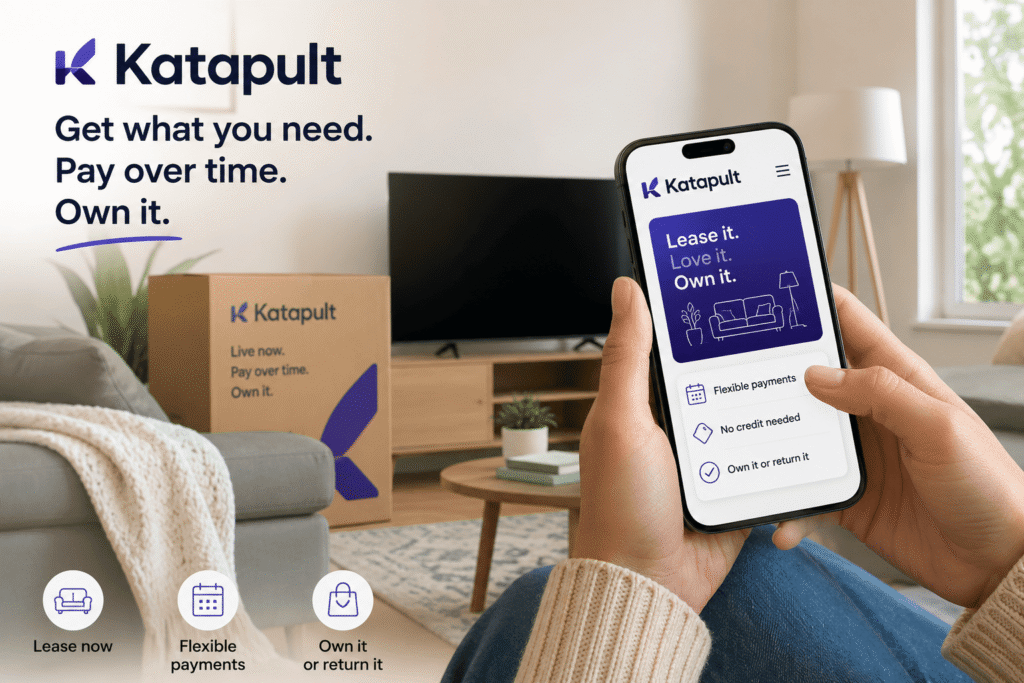
Katapult belongs in a different category from the other apps on this list. It’s a lease-to-own service rather than a standard installment loan or BNPL plan.
The service is aimed at shoppers who need items such as furniture, electronics, or appliances and may have trouble qualifying through traditional credit. Katapult doesn’t require traditional credit approval, and customers can continue leasing, exercise a purchase option, or return the product subject to the agreement’s terms.
The most important detail is the total cost. Katapult clearly states that reaching ownership through the lease will cost more than the merchant’s cash price. Customers may be able to reduce that expense by using its three-month early purchase option rather than continuing through the full lease term.
Katapult may be useful when an essential item can’t wait, and other payment options aren’t available. It shouldn’t be treated as a cheaper or equivalent substitute for Perpay’s zero-interest Marketplace.
Do You Actually Need a Perpay-Style App?
Perpay combines three things that most competitors separate: a shopping marketplace, paycheck-linked repayments, and optional credit reporting. Before switching, decide which part you’re actually trying to replace.
Zebit is the closest match when you still want to browse a marketplace and spread payments over several months. Sezzle is more relevant when credit reporting and broader retailer access matter. Klarna, Afterpay, and Zip are better for short-term checkout flexibility, while Affirm is built for purchases that need longer financing.
For Pay in 4 shopping outside a marketplace, start with our Afterpay review to see how fees and limits compare.
Payroll deductions can feel inconvenient, but they also line payments up with money coming in. Most alternatives charge a card or bank account on fixed dates instead. That gives you more control, but it also means you’re responsible for making sure the money is available when each payment hits.
Katapult should remain a last-resort option rather than a direct Perpay replacement. Lease-to-own can provide access when traditional financing isn’t available, but the path to ownership may cost substantially more than buying the item outright.
Final Verdict
The best Perpay alternative depends on what you want to change. Marketplace-style services offer a similar shopping experience without payroll deductions, while traditional buy now, pay later apps work at more stores and provide shorter payment plans. Longer-term financing may help with expensive purchases, but interest and fees can increase the total cost. Before choosing an option, compare the retail price, payment schedule, credit-reporting policy, and amount you’ll pay overall.
Before you choose a provider, read our Sezzle review guide to compare fees, store coverage, and repayment plans.
Frequently Asked Questions
How do apps like Perpay work?
These services let you purchase eligible products and repay the balance through installments. Payments may be collected from your paycheck, bank account, debit card, or credit card.
Do Perpay alternatives require direct deposit?
Most don’t require you to redirect part of your paycheck. They typically collect scheduled payments from a linked bank account or card instead.
Can installment shopping apps help build credit?
Some report eligible payment activity to one or more credit bureaus, but many don’t. Check whether reporting is automatic, optional, or limited to a paid credit-building program.
Do apps like Perpay charge interest?
Some offer interest-free installment plans, while others charge interest, service fees, origination fees, or lease costs. Compare the total repayment amount rather than focusing only on the monthly payment.
What should you consider before using a Perpay alternative?
Look at the product price, down payment, number of installments, payment frequency, fees, credit impact, and return policy. Make sure the scheduled payments fit your budget before placing the order.