
California’s ‘Top 2’ primary experiment failed to deliver on promises. It’s time we end it
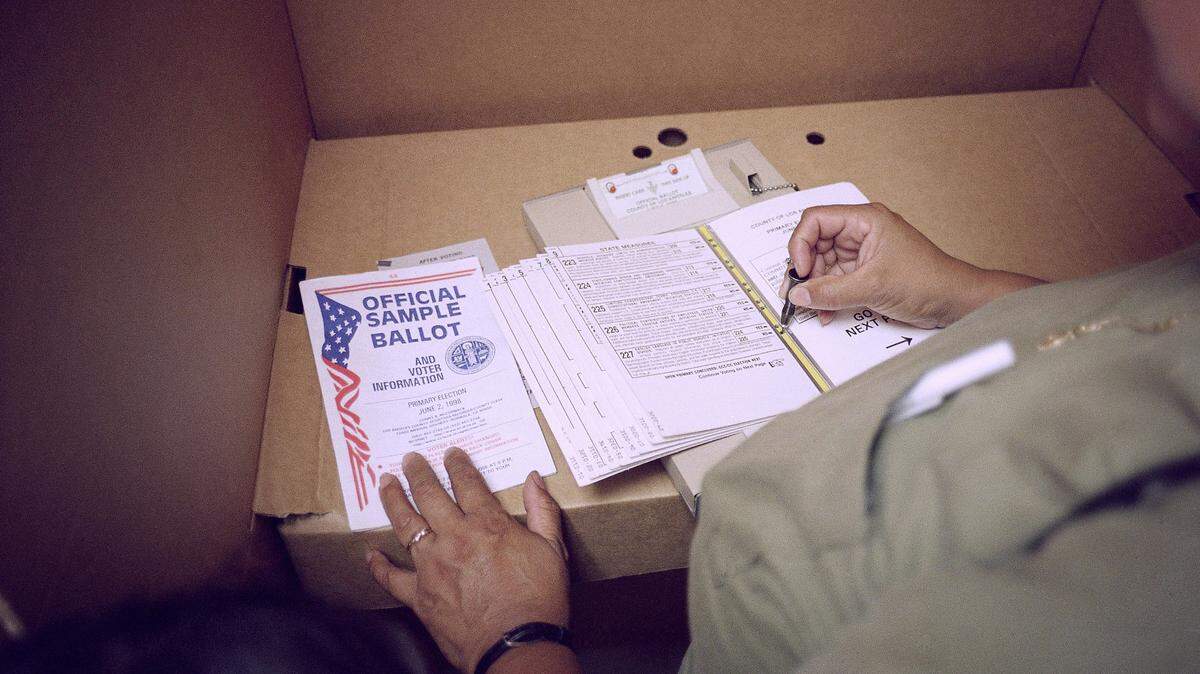
Ballots have been mailed out and the stage has been set for California’s oddball top-two primary system to create mischief, produce quirky and unsatisfying results and generate much confusion.
A byproduct of a 2010 state budget deal, this unusual system was an experiment in democracy. Sadly, it has failed to deliver on any of the promises made by its backers.
Proponents said that the system would empower voters who aren’t aligned with either major party and therefore increase voter turnout and participation. That hasn’t happened. Turnout in the primaries remains low; it’s averaged just 31% of registered voters over the last two gubernatorial elections — lower than the average turnout in the two gubernatorial primaries that took place before the top-two system was implemented.
As for empowering non-aligned voters, that hasn’t happened either. Candidates who claim no party preference have fared poorly in top-two contests, and in the one statewide primary in which such a candidate did advance to the general election, it was one in which Republicans didn’t field a candidate.
Proponents also asserted that this system would reward moderation and reduce gridlock, but clearly, our politics have become more polarized than ever. If you need evidence of that, just take a look at California’s highly splintered congressional delegation. Concurrently, no one would claim the state legislature has mellowed in the last decade.
Under this system, regardless of how many candidates there are representing any number of different parties on the ballot, only the two with the greatest number of votes advance. That’s why it’s called the “top two” — though it could’ve been called the “pick your own opponent” primary, or the “limit voters’ choices in the general election” primary.
This time around, we’re again seeing how candidates can try to game the top-two system.
The “pick your own opponent” strategy worked for Gov. Gavin Newsom four years ago, when he paid for ads designed to alert conservative voters that a no-name Republican was their best choice. It worked. That candidate finished second in the primary, and Newsom trounced him in the fall.
Now Newsom is again airing an ad that singles out a specific Republican, alerting conservative voters that this candidate “stands with Donald Trump.” Clearly, he’s the one Newsom wants to run against.
The same cynical strategy is being employed by backers of Attorney General Rob Bonta. An independent group supporting Bonta has been running radio ads highlighting their preferred Republican opponent as “a true conservative” and “a huge Trump supporter.”
There are other ways for candidates to create mischief in the top-two system. A Democratic candidate in the Bay Area, for instance, was accused in a lawsuit of recruiting two Republicans to run in the primary in the hope of splintering the Republican vote so that he could advance to challenge a fellow Democrat in the fall.
Just as the top-two primary has created opportunities to game the system, it has produced quirky results that have denied millions of Californians the chance to vote for like-minded candidates in general elections. Two out of three U.S. Senate races and 12% of all congressional races under this system have featured two candidates from the same party.
Often, those races are in lopsided districts — but not always. In 2012, the system ended up pitting two Republicans against each other in a San Bernardino County congressional district in which Democrats held a 6-point edge in voter registration. It wasn’t voter preference, it was simple math that allowed that to happen — there were simply more Democrats on the primary ballot than Republicans.
In that race, Democrats got a taste of what Republicans have experienced in senate races. The last time California Republicans had a chance to vote for a senate candidate from their party in the general election was 2014.
The top-two primary has spawned cynical campaign tactics, forced millions of voters to choose between two unsatisfactory options in the fall and produced bizarre results. It’s time to declare this experiment a failure and move on.