
Latest storm drops modest rain totals around Sacramento, dusting of Sierra snow
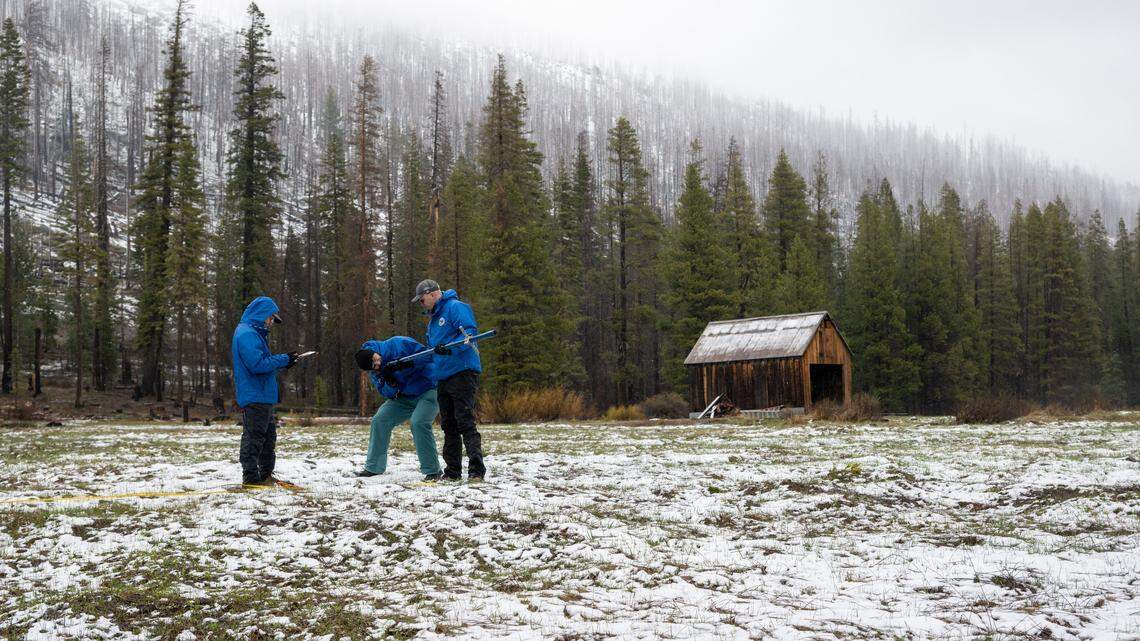
A midweek storm brought light rain to Sacramento and a modest burst of snow to the Sierra, but not nearly enough to undo the damage from a historically hot March that wiped out much of California’s snowpack.
Sacramento picked up about a quarter-inch of rain over 48 hours ending Thursday morning. In the foothills, totals climbed quickly, reaching nearly 3 inches in parts of El Dorado and Amador counties.
In the Sierra, several familiar locations saw snow depth increase by roughly 7 to 12 inches — a late-season boost that offered some help, but little change to the state’s overall water outlook for the summer.
The system arrived just as state officials measured the April 1 snowpack — typically the seasonal peak — and found it at only 18% of average, the second-lowest level in 75 years.
Rain fell unevenly across the region
According to gauges monitored by the National Weather Service and the California-Nevada River Forecast Center, the storm followed a familiar pattern: light in the Valley and heavier in the foothills. Around Sacramento, rainfall totals for the 48 hours ending 8 a.m. Thursday stayed modest:
- Sacramento Executive Airport: 0.26 inches
- Davis: 0.20 inches
- Foothill Farms: 0.55 inches
- Orangevale: 0.67 inches
- Elk Grove: 0.77 inches
- Granite Bay: 0.99 inches
- Lincoln airport: 0.73 inches
- Yuba City: 0.50 inches
In the foothills, totals increased — especially along the western slope north of Highway 50 — but the storm was too warm to produce snow at lower elevations:
- Foresthill: 3.33 inches
- Grass Valley: 3.29 inches
- Placerville: 2.95 inches
- Fiddletown: 2.39 inches
- Ione: 1.69 inches
- Miners Ravine: 1.26 inches
- Auburn Ravine: 0.94 inches
Farther north, Valley cities saw lighter totals, including 0.39 inches in Redding and just 0.12 inches in Red Bluff.
Some Sierra snow added
Snowfall was largely confined to higher elevations, underscoring how warm storms and rising snow levels are reshaping California winters. Among the more notable increases in snow depth over the 48-hour span ending Thursday morning:
- Independence Lake, Sierra County: 12 inches
- Central Sierra Snow Lab, Donner Pass: 11 inches
- Palisades Tahoe: 10 inches
- Echo Peak: 9 inches
Other sites, including Carson Pass and Forestdale Creek, not far from Highway 88, gained around 7 to 8 inches. But lower-elevation sensors showed little change.
A small boost after a dramatic collapse
The new snow came too late to significantly change the state’s water picture.
After a series of strong winter storms boosted snowpack earlier this year, an intense March heat wave melted much of it away. By Wednesday morning, surveyors at Phillips Station near Lake Tahoe found little more than patchy snow. Statewide, the snowpack dropped from 66% of average in late February to just 18% by April 1, considered the end of the winter season.
Scientists say that kind of rapid melt is becoming more common as the climate warms, with more precipitation falling as rain instead of snow — even at higher elevations. Climate scientist Daniel Swain said the March heat brought some of the largest temperature departures from normal ever recorded in parts of the state, accelerating the melt.
The result is a shrinking natural reservoir. Snowpack typically melts slowly through spring and summer, feeding rivers and reservoirs. Without it, water managers rely more heavily on what’s already stored.
Reservoirs remain in strong shape
For now, that stored water is in good shape. Major reservoirs across Northern California remain above historical averages for this time of year, thanks to storms earlier in the winter:
- Shasta Lake: 90% of capacity (114% of average)
- Oroville: 91% (123%)
- Folsom: 85% (134%)
- San Luis: 89% (102%)
- New Melones: 78% (126%)
Those levels will help buffer the effects of the weak snowpack, though state water managers cautioned Wednesday that reservoirs alone can’t fully replace the steady supply snowmelt usually provides.
“What we have in our reservoirs is what we have, and we have it to manage for the next six months or so, until we hit October,” said Karla Nemeth, director of the Department of Water Resources.
What comes next — and what about El Niño?
Looking ahead, forecasters are watching the potential return of El Niño later this year.
NOAA has issued an “El Niño Watch,” with conditions possibly developing by summer and strengthening into fall. Historically, El Niño years tilt the odds toward wetter conditions in California — but don’t guarantee them.
Meteorologists emphasize that the relationship is inconsistent, especially in Northern California.
El Niño “shifts the over-under on rainfall,” Jan Null, a former National Weather Service forecaster who operates Golden Gate Weather Services, told the Bay Area News Group recently. “But it’s not a sure bet.”
In other words, even a strong El Niño would not ensure a wet winter — or a recovery from this year’s snowpack losses.
This story was originally published April 2, 2026 at 10:07 AM.
