Sacramento council delays nearly $18M in child, youth services funding. Here’s why
AI-generated summary reviewed by our newsroom.
- Sacramento City Council delayed $17.9M Measure L youth funds.
- Community groups and Native organizations criticized funding process.
- Final funding decision is expected June 10, alongside city budget adoption.
A nearly decade-long push to steer millions of dollars to Sacramento youth was delayed last week by the City Council, drawing criticism about how the funding will be distributed among community groups.
The money will come from Measure L, a 2022 ballot initiative that allocates some revenue from taxes on cannabis operations to child and youth services. Similar measures failed repeatedly before voters overwhelmingly approved it three years ago.
Following its passing, the city created a Sacramento Children’s Fund Planning and Oversight Commission to help develop a strategic funding plan. The approved plan, which has faced scrutiny, designated that the majority of Measure L funds would be split evenly between community-based nonprofits and public agencies, including city departments.
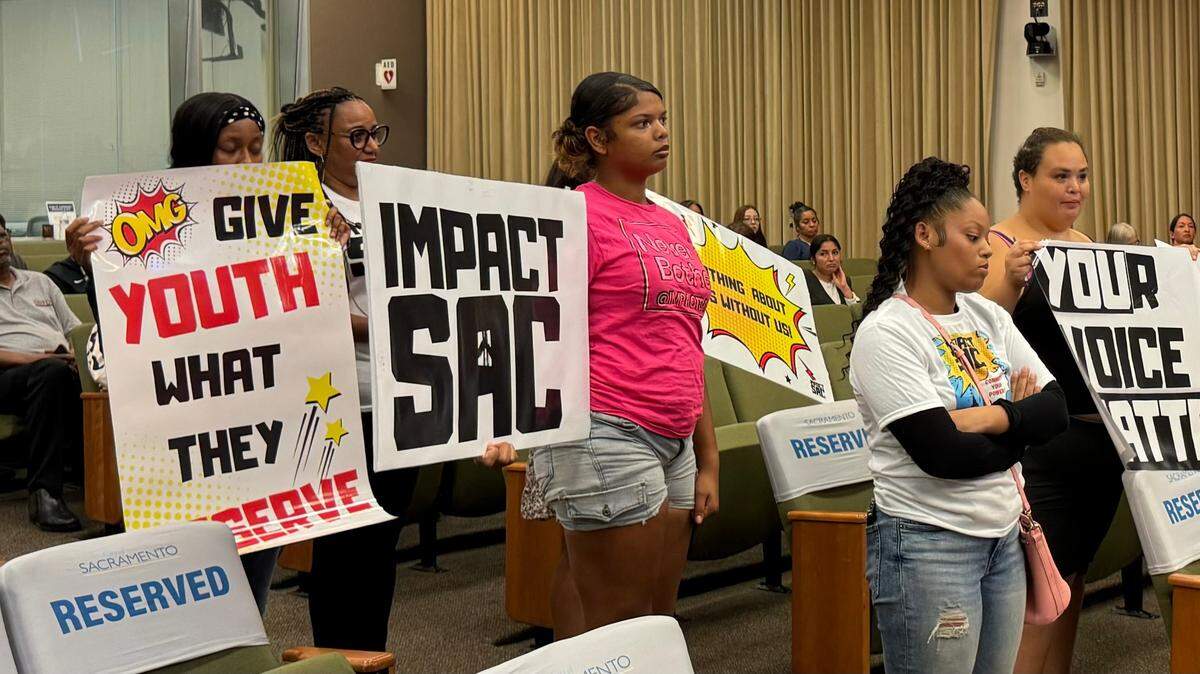
At last week’s City Council meeting, the elected body was presented with two scenarios to allocate roughly $17.9 million for three and a half years. Both options would have included only a slice of the more than 100 organizations that applied for the money. Many of these groups not included were among the 45 public speakers at the meeting.
“We continue to be overlooked,” said Angelina Hinojosa of the Pinoleville Pomo Nation. “We are people who have endured broken treaties, broken promises and generations of being made invisible. And today, when Native youth programs are left out of funding and support, that invisibility continues.”
Neither funding scenario was ultimately chosen as the majority of the City Council requested more time to review the proposals.
“I just want more information and make sure that we can make a sound decision for our kids,” said Councilmember Karina Talamantes.
Council members Lisa Kaplan and Mai Vang pushed for the elected body to make a decision, citing timely support for smaller community organizations and respect for the process.
“When we delay this, it delays them hiring people,” Kaplan said on May 20. “It delays them starting this process.”
Rene Kausin, program manager for the department of Youth, Parks, and Community Enrichment, said the council’s decision would affect the release of funds to a “certain extent.” She estimated that money would be accessible to groups “closer to July.”
“It’s unfortunate that this process continues to be delayed because the community needs these funds now more than ever,” said Mónica Ruelas Mares, chair of Sacramento Children’s Fund Planning and Oversight Commission, in a statement.
The council is expected to vote for a funding scenario at its June 10 meeting. That is the same day they plan to finalize the city’s $1.65 billion budget for the upcoming fiscal year, which begins in July.
Last week’s meeting featured a litany of speakers who criticized the application process and methodology. The funding had garnered 121 applications, with city staff narrowing it down to 16 or 24 awardees, depending on the scenario.
The applications were scored by several factors such as budget, outcomes and impact, historical capacity, staffing qualifications and program design, according to the city staff report. Public speakers, including Marbella Sala, raised concerns about how the application process did not consider small organizations that may not have grant writers.
“They did not have the infrastructure or the support staff as those bigger agencies,” Sala said. Some council members, including Vang and Talamantes, shared similar sentiments.
Among those who felt most left out were Native American serving organizations. Neither funding scenario featured a group specializing in Native American communities.
Albert Titman, deputy director for the Native Dads Network, said this decision continues the “historical trauma” of tribal people in this country. He cited data that says Native American communities are at risk of higher rates of suicide, school dropouts and incarceration compared to other groups.
“Once again, we’ve been marginalized,” Titman said. “We’ve been overlooked.”
The potential awardees in both scenarios include the Roberts Family Development Center, La Familia Counseling Center, Inc., Lao Family Community Development Inc., Sierra Service Project, Food Literacy Project, PRO Youth & Families, Waking the Village and Campus Life Connection.
City programs funded remain the same in the two scenarios. They would support the city’s school homeless education services program, fire department’s diversity, outreach recruitment division, youth program scholarship fund, recreation explorer camp, 28th & B Skate and Urban Art Park project, a new North Sacramento-Hagginwood Library, Granite Regional Park project and the county office of education early learning program.
Another 20% of the Measure L funds will go to a guaranteed basic income program. Applications for that program will open by September, said city spokesperson Gabby Miller.
This story was originally published May 28, 2025 at 2:49 PM.
CORRECTION: This story has been updated to clarify that Measure L funding is available to community-based nonprofits and public agencies, including city departments.