Federal judge bars Sacramento from clearing homeless tent encampments on public property
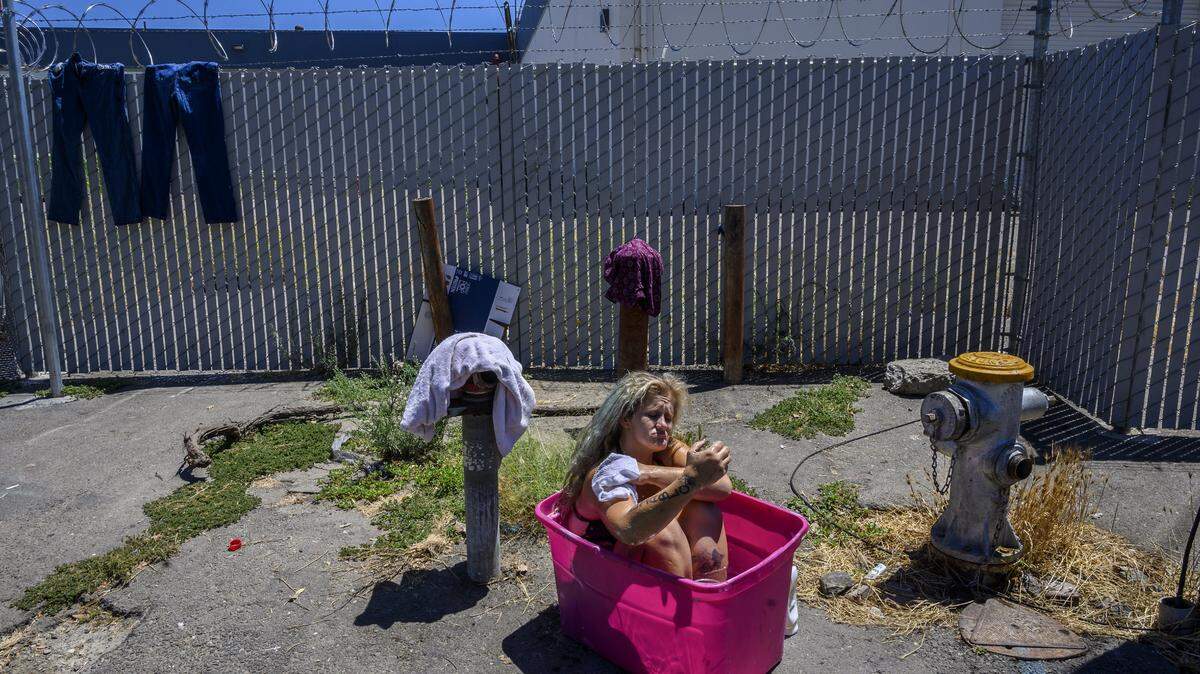
A new federal court ruling forbids Sacramento police and city officials from clearing homeless tent encampments on public property until Aug. 25
Judge Troy L. Nunley issued the preliminary injunction Thursday in response to a lawsuit filed by the Sacramento Homeless Union and three unhoused individuals in the U.S. District Court for Eastern California.
The lawsuit, filed in June, also asks the court to force the city and county to open more homeless cooling centers during the hot Sacramento summer months. The judge did not grant that request.
The Homeless Union argues local government agencies have failed to provide a sufficient number of cooling centers for unhoused people during the extreme heat events that regularly occur during Sacramento summers.
Extreme heat can be fatal. Two homeless individuals died with heat stroke as one of multiple causes of death in 2020, according to the Sacramento County Coroner’s Office.
A 2018 federal court ruling known as Martin v. Boise already limits when western cities can clear tent encampments from public property. Sacramento continues to remove certain tent encampments if officials regard them as a threat to so-called critical infrastructure, such as damaging levees, or causing other health and safety issues.
The new ruling does not appear to allow sweeps for those reasons.
“Here, the court notes the possible harm in temporarily restraining the city from clearing encampments may hamper the city’s ability to promote the public health, safety, and general welfare,” the ruling reads. “However, the city’s interest in clearing encampments during extreme heat events is far outweighed by plaintiffs’ interest in their own health and welfare,” Nunley wrote.
The city’s Department of Utilities posted notices on July 25 to camps around the Morrison Creek levee in south Sacramento requiring them to move by Aug. 8. It’s unclear if that sweep will still happen.
The City Council last month voted to open a year-round, daily weather shelter on Auburn Boulevard beginning Sept. 1. The vote would give more access to the site, which previously opened only under certain conditions. So far this summer, it opened for a total of six days.
The city says homeless people also can find relief on hot days in libraries and community centers. The city provides about 1,100 shelter beds, although thousands more people sleep outdoors or in vehicles.
“The city has clearly taken numerous substantive steps to address heat-related issues for unhoused Sacramento citizens,” the city wrote in a court filing last month
Barriers to reaching shelter
But many homeless individuals can not get to the cooling center, or other public buildings, the lawsuit alleged. Many do not have vehicles and cannot afford bus fare. The lawsuit names three homeless individuals who allege they have not been offered transportation to the cooling centers, including one woman who is staying in a tent at the city’s Safe Ground at Miller Park.
After Aug. 25, the union plans to file a legal action to ask the judge to extend the preliminary injunction, said Anthony Prince, the attorney for the homeless union.
Sacramento also is facing pressure to provide more shelter space and to move encampments as its homeless population grows. City voters in November are expected to see a business-backed ballot measure that would force Sacramento to offer more shelter or designated camping sites. The measure also would empower city officials to clear more encampments.
About 9,278 individuals experience homelessness in the Sacramento County on any given night — nearly double the amount from January 2019, a report found, according the most recent federally mandated point-in-time count. Up to 20,000 people will experience homelessness over the course of the year.
Sacramento can tow homeless vehicles
When Nunley’s injunction expires later this month, “the city will at that time inform the court that it has not been sweeping encampments and welcomes the opportunity to continue to clarify its position and unhoused protocols — especially surrounding critical infrastructure — and to explore solutions with community partners,” City Attorney Susana Alcala Wood said in a written statement. “Meanwhile, the city will continue to use all its available resources to address the hardships encountered by unhoused individuals while working to ensure the health and safety of all residents.”
Nunley’s ruling does not prohibit the city from removing vehicles used by homeless individuals. Those vehicles can be towed if they remain parked in the same spot for more than 72 hours.
The case was originally assigned to Judge Kimberly J. Mueller, but the union requested a new judge alleging a conflict of interest because her husband Robert Slobe is president of North Sacramento Land Company, based on a street where business owners frequently ask the city to clear homeless vehicles. She said she is compassionate to the homeless, but agreed to recuse herself and the case was reassigned to Nunley.
The new ruling marks the second time a judge has ruled in favor of the Sacramento Homeless Union, which has about 2,800 members, regarding sweeps. Judge Laurie M. Earl in July 2020 ruled that the city violated a county coronavirus public health order when it cleared camps, and ordered it to comply in the future. The new ruling is a preliminary injunction in federal court, while the previous one was a writ of mandate in Sacramento County Superior Court.
This story was originally published August 2, 2022 at 12:00 PM.